


Similiar games









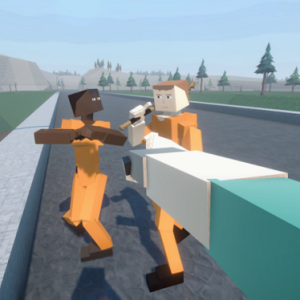








Tentacle Locker is a short arcade-style game built around timing, positioning, and pattern recognition. The player controls a hidden mechanism inside a hallway locker and must interact with characters as they pass by. The core idea is based on observing movement patterns and choosing the correct moment to activate the locker. The game does not rely on long progression systems or complex controls, instead focusing on quick decision-making and repetition to improve performance.
Gameplay Concept And Flow
Each round in Tentacle Locker follows a simple structure. Characters move across the screen along a fixed path, and the player must react within a limited time window. The challenge comes from learning how long each character takes to pass and predicting the correct moment to act. The game is designed around trial and error, encouraging players to retry levels in order to improve timing accuracy.
The environment remains mostly unchanged, which shifts attention toward player precision rather than exploration. Mistimed actions result in failure, while correct timing allows the player to progress. This loop creates a rhythm-based experience where success depends on observation and consistency.
Core Mechanics Overview
The gameplay is built on a small set of clearly defined mechanics:
· Timing-based interaction triggered by player input
· Predictable character movement patterns
· Increasing difficulty through faster pacing
· Immediate feedback after each action
· Short rounds designed for repeated attempts
These mechanics combine to form a simple but structured challenge that emphasizes learning through repetition rather than complexity.
Difficulty And Player Adaptation
As the game continues, the pace gradually increases, requiring quicker reactions and better anticipation. The player must adjust to shorter reaction windows and less margin for error. Because there are no complex systems to manage, the difficulty comes entirely from timing and focus rather than strategy or resource management.
This design encourages players to recognize patterns and refine their responses. Success often comes after several failed attempts, making improvement feel measurable and direct. The absence of randomness ensures that outcomes depend on player input rather than chance.
